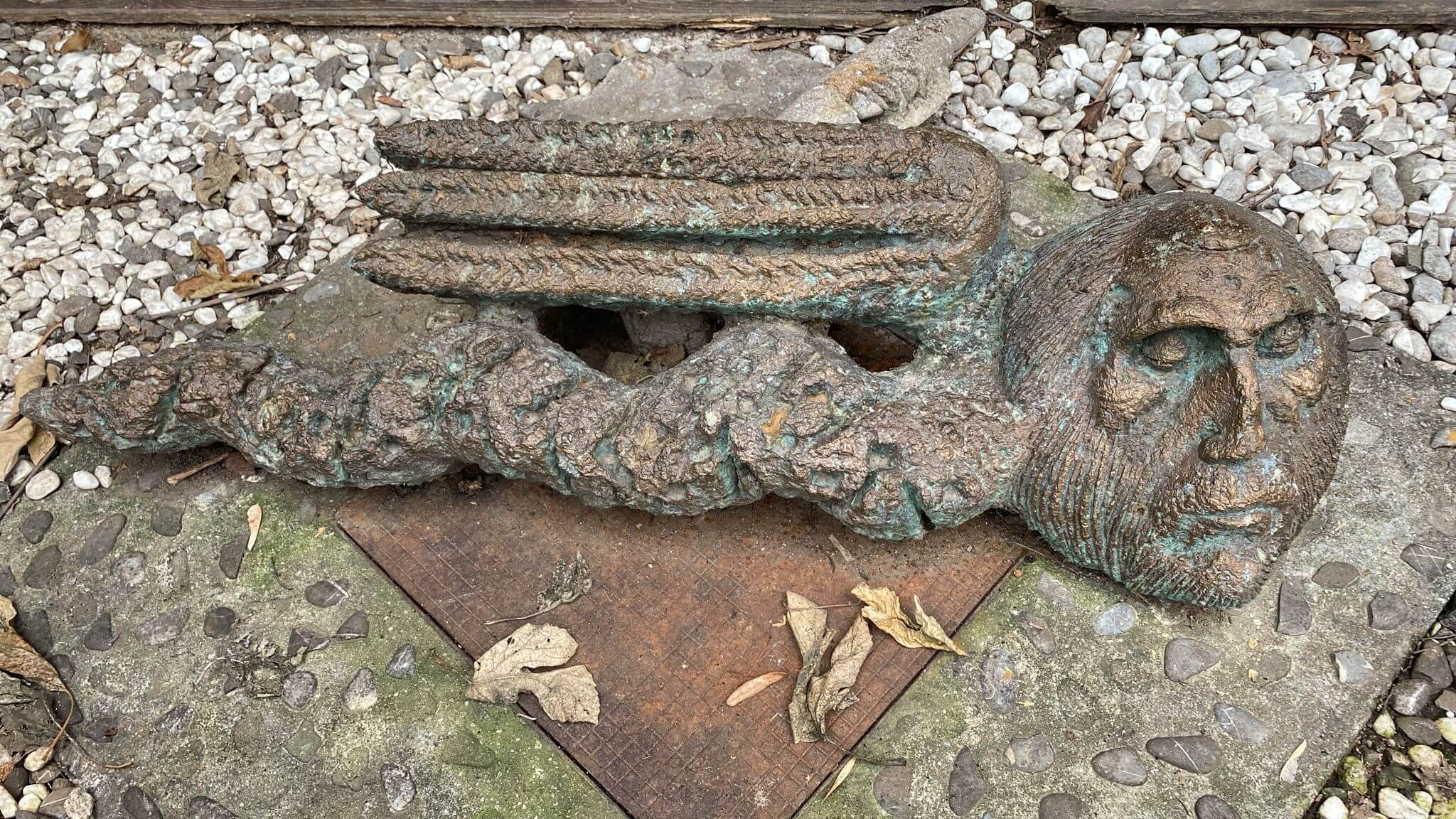
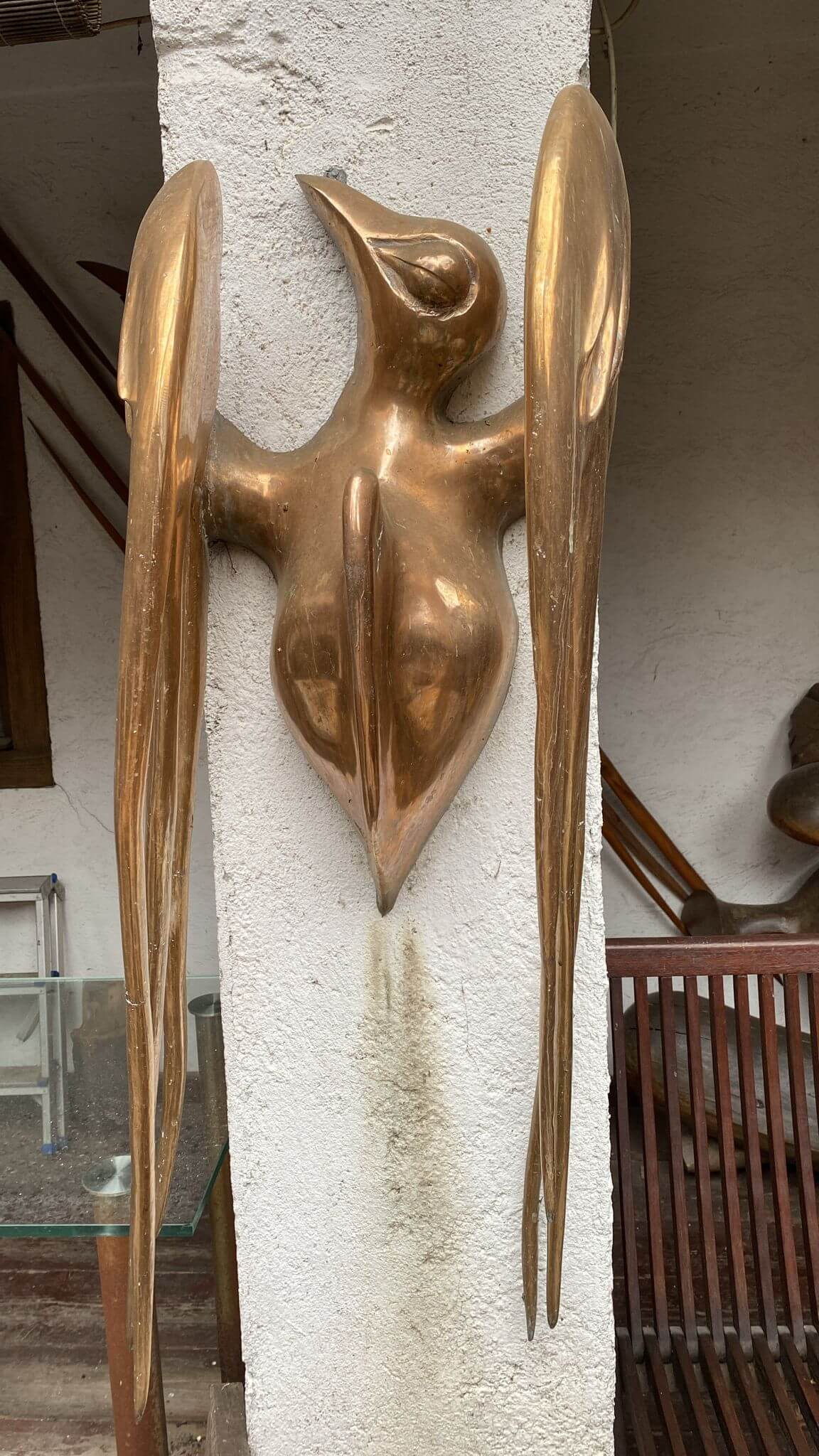
Adrian Ilfoveanu, Îngerul și Îngerul cazut
Adrian Ilfoveanu (n. 1971) aparține unei familii de artiști care a marcat decisiv istoria ultimelor decenii. În contrapunct cu tatăl său, pictorul Sorin Ilfoveanu, Adrian a optat pentru sculptură, fără să neglijeze grafica, matricea din care pleacă majoritatea lucrărilor sale. Pe lângă savoir-faire-ul dobândit prin disciplină și asiduitate, alături de nume importante ale școlii de artă bucureștene, Adrian Ilfoveanu e dotat cu un „organ metafizic”, mai bine spus, cu o sensibilitate metafizică rar întâlnită la artiștii contemporani. De aici, temele sale obsedante: zborul (ciclul de Păsări), nașterea, puritatea (Copilărie, Imaculata Concepțiune), căderea și răscumpărarea (Înger căzut). Temele respective izvorăsc din adâncul ființei sale ingenue, autentice, dar sunt și produse ale culturii livrești. De la tatăl său, de la generația acestuia, Adrian a moștenit pasiunea pentru lectură, interesul față de istoria religiilor, literatură, film și filozofie.
Cele două sculpturi expuse la Oradea se intitulează Înger căzut și Înger. Ele alcătuiesc un diptic biblic, modelat de inspirația și îndemânarea sculptorului. Înger căzut trimite la celebrul episod din Geneză 6: „Când oamenii au început să se înmulțească pe pământ, li s‑au născut și fiice. Fiii lui Dumnezeu (îngerii), văzând că fiicele oamenilor erau frumoase, și‑au luat soții dintre toate cele pe care le‑au ales”. Plecând de la acest episod, unele texte antice (Cartea lui Enoh, Cartea Jubileelor etc.) explică apariția, pe pământ, a unei generații de uriași, dar și începutul civilizației tehnice: focul, meșteșugul prelucrării metalelor, inclusiv, sau implicit sculptura. În Apocalipsa lui Ioan capitolul 12, îngerul căzut e numit Lucifer („Purtătorul de lumină”, aluzie la mitul prometeic), cel care s-a răzvrătit împotriva lui Iahve, fiind biruit de oștile arhanghelului Mihail și azvârlit în iad. Ca marker artistic foarte subtil, Înger căzut e „ruginit”, patinat cu nuanță ce exprimă degradarea, pervertirea, în timp ce Îngerul, așezat pe un soclu înalt, are o strălucire de bronz lucios, simbolizând puritatea și integritatea. De asemenea, bronzul lucios e menit să reflecte lumina soarelui, pe timpul zilei, și a reflectorului, pe timpul nopții.
Cele două lucrări marchează un traseu metafizic, universal-inițiatic: damnare și răscumpărare, orbire și veghe/ trezie, revoltă egoistă și împăcare, trădare și fidelitate etc. De remarcat profilul, deopotrivă asemănător, dar și foarte diferit, al personajelor. Înger căzut trimite la imaginea șarpelui edenic, târându-se prin țărână, împovărat cu un trup animalic, greoi, strivit de materie. Dimpotrivă, Îngerul e aripă, lumină și cântec. Disimetria calculată îl face și mai îngeresc, și mai desăvârșit, și mai frumos, întreaga operă a lui Adrian Ilfoveanu ilustrând, putem spune, celebra apoftegmă a lui Baudelaire: „Frumosul e întotdeauna bizar”.
Cristian Bădiliță
English
Adrian Ilfoveanu (*1971) belongs to a family of artists who have decisively shaped recent history. Unlike his father, the painter Sorin Ilfoveanu, Adrian Ilfoveanu has chosen to concentrate on sculpture. However, he has not neglected the graphic arts, which form the matrix of most of his works. In addition to the know-how acquired through discipline and diligence, alongside important names of the Bucharest art schools, Adrian Ilfoveanu is endowed with a „metaphysical organ”, or rather, with a metaphysical sensibility rarely found in contemporary artists. Hence his obsessive themes: flight (Păsări [Birds] cycle), birth, purity (Copilărie [Childhood], Imaculata Concepțiune [Immaculate Conception]), fall and redemption (Înger căzut [Fallen Angel]). These themes spring from the depths of his ingenue, authentic being, but they are also products of bookish culture. From his father, especially from his father’s generation, Adrian inherited his passion for reading, his interest in the history of religions, literature, film and philosophy.
The two sculptures exhibited in Oradea are entitled Fallen Angel and Angel. They form a biblical diptych, shaped by the inspiration and skill of the sculptor. Fallen Angel refers to the famous episode in Genesis 6: „Then the people began to multiply on the earth, and daughters were born to them. The sons of God saw the beautiful women and took any they wanted as their wives”. On the basis of this episode, some ancient texts (the Book of Enoch, the Book of Jubilees, etc.) explain the appearance on earth of a generation of giants, but also the beginning of technical civilisation: fire, metalworking, including, or implicitly, sculpture. In the Book of Revelation, chapter 12, the fallen angel is called Lucifer (‘Light Bearer’, an allusion to the Promethean myth), who rebelled against Yahweh, was overcome by the archangel Michael’s armies and cast into hell. As a very subtle artistic marker, the Fallen Angel is „rusty”, glistening with a hue expressing degradation, perversion, while the Angel, sitting on a high pedestal, has a shiny bronze sheen, symbolising purity and integrity. The shiny bronze is also meant to reflect sunlight during the day and the spotlight at night.
The two works mark a metaphysical, universally initiatory path: damnation and redemption, blindness and wakefulness, selfish rebellion and reconciliation, betrayal and fidelity, etc. Note the similar, but also very different nature of the characters. Fallen Angel refers to the image of the Edenic serpent, crawling through the dust, burdened with a heavy, animal-like body, crushed by matter. By contrast, the Angel is wing, light and song. The calculated dissymmetry makes it even more angelic, even more perfect, even more beautiful, the whole of Adrian Ilfoveanu’s work illustrating, we could say, Baudelaire’s famous apophthegm: „Beauty is always bizarre”.